World Map › Guides
Guide
What Causes the Northern Lights? The Sun, Earth's Shield and a Little Air
Published · updated · Live Atlas
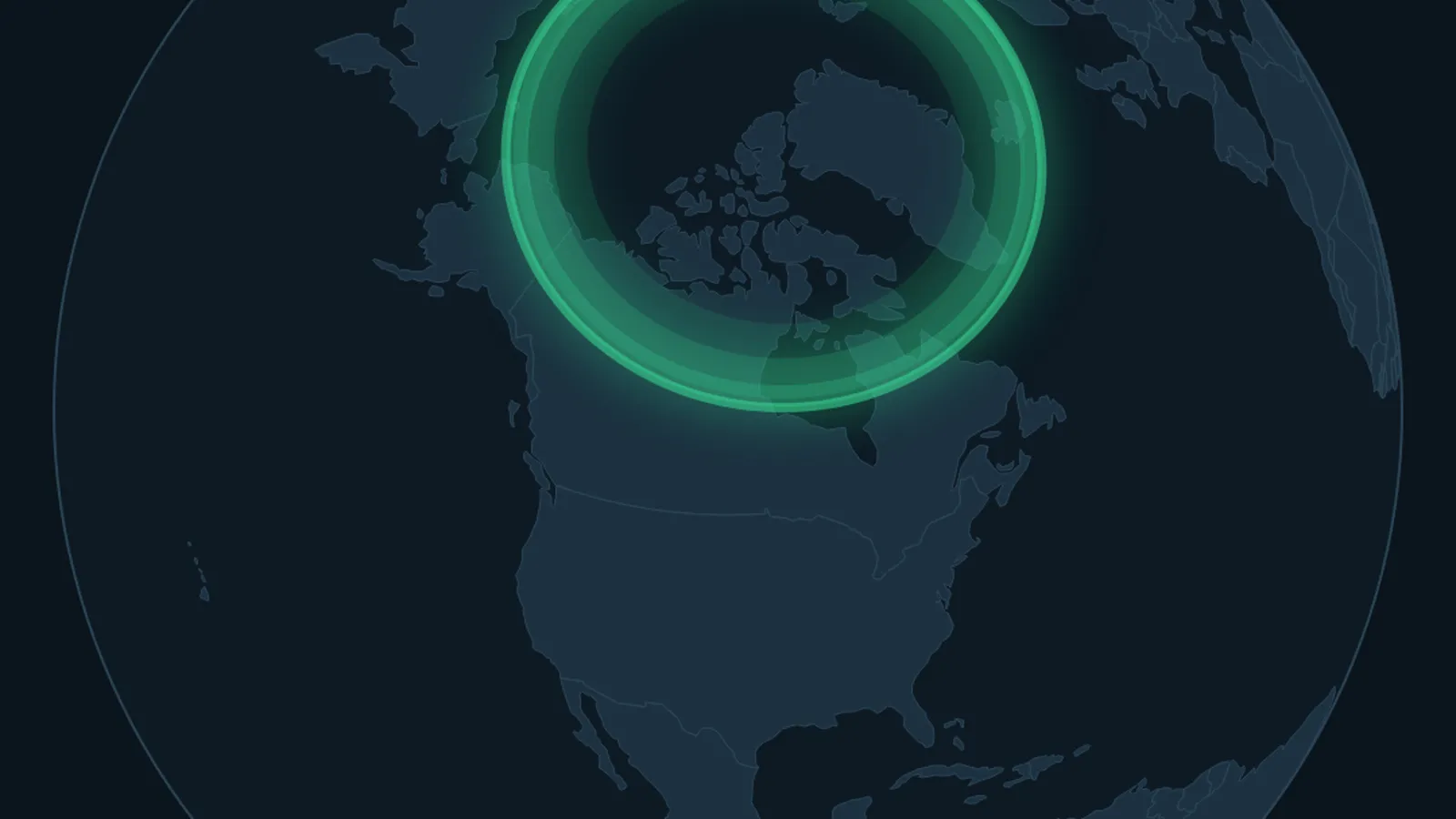
The northern lights happen when charged particles from the Sun, mostly electrons, are steered by Earth's magnetic field into the upper atmosphere near the poles. They slam into oxygen and nitrogen about 100 to 300 km up, and those gases glow green, red, blue or purple.
Loading the latest NOAA data…
Kp 5 or more means a geomagnetic storm, when the aurora can reach the northern United States. Full forecast on our Northern Lights Tonight page.
From the Sun to Your Sky, in Three Steps
1. The Sun throws out particles
The Sun constantly releases a stream of charged particles called the solar wind. Sometimes it also hurls a giant cloud of them, a coronal mass ejection, or CME. When a CME heads our way, it takes one to three days to reach Earth, and that is what sets off the big aurora nights.
2. Earth's magnetic field steers them
Earth's magnetic field acts like a shield and deflects most of these particles. But it also funnels some of them down along its field lines toward the north and south magnetic poles. That is why auroras glow in a ring around each pole, called the auroral oval, rather than over the Equator.
3. The air lights up
When these particles hit atoms and molecules of the upper atmosphere, they give them extra energy. The gases release that energy as light, much like the gas inside a neon sign.
Why Are the Northern Lights Green? And Sometimes Red or Purple?
| Color | Gas | Roughly where |
|---|---|---|
| Green, the most common | Oxygen | About 100 to 200 km up |
| Red, rarer | Oxygen | Higher up, in thinner air |
| Blue and purple | Nitrogen | Often along the lower edge |
Our eyes are most sensitive to green, which helps explain why green dominates. Red light needs very thin air to form, so it shows up mostly during strong storms. Phone cameras often catch pinks and purples the eye barely sees.
Do the Southern Lights Happen Too?
Yes. The same process lights up a ring around the south magnetic pole, called the aurora australis. Both auroras usually happen at the same time, as mirror images. Fewer people see the southern one simply because far less land and fewer cities lie under it.
Why There Have Been So Many Auroras Lately
The Sun follows a cycle of about 11 years, swinging from quiet to active. NASA and NOAA announced in October 2024 that the Sun had reached the maximum period of its current cycle, which means more CMEs and more strong storms. In May 2024 Earth saw its first extreme (G5) geomagnetic storm since 2003, and the aurora appeared far south of its usual range.
How to Give Yourself the Best Chance
Watch the Kp forecast, get away from city lights, look north and give it an hour or two around midnight. Our live forecast page shows how far south each storm level can reach.