World Map › Guides
Guide
What to Do During an Earthquake, Step by Step
Published · Live Atlas
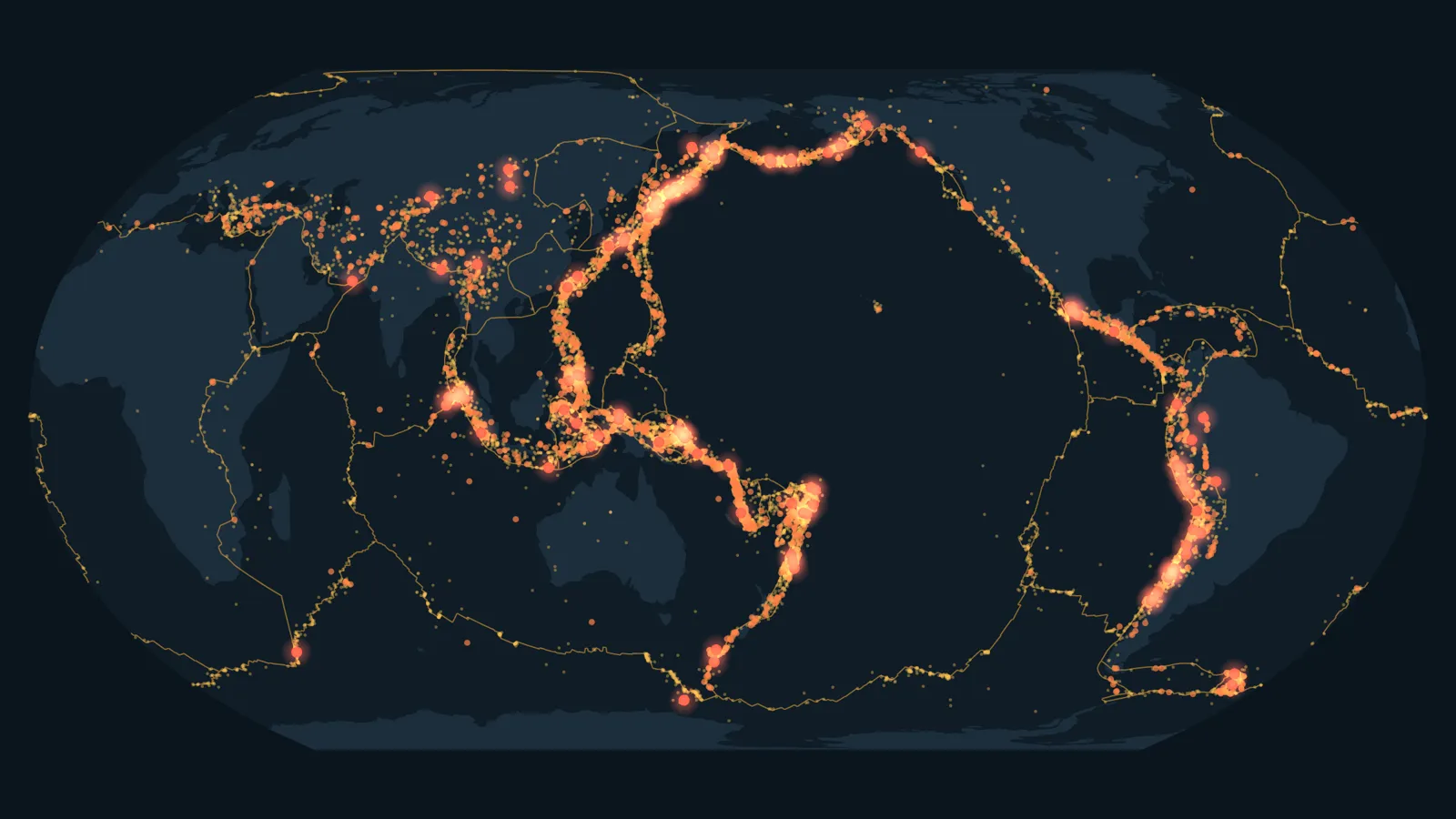
During an earthquake, Drop, Cover, and Hold On. Drop to your hands and knees where you are, cover your head and neck (under a sturdy table if one is close), and hold on until the shaking stops. Do not run outside and do not stand in a doorway. If you are near the coast and the shaking is strong or long, walk to high ground as soon as it stops, without waiting for a warning.
Step by Step, the Official Way
US emergency agencies all teach the same three moves. Ready.gov, run by the Department of Homeland Security, and the Earthquake Country Alliance agree that they reduce injuries and deaths in most situations.
- Drop where you are, onto your hands and knees. The Earthquake Country Alliance explains why. The position keeps you from being knocked down and lowers your chance of being hit by falling or flying objects.
- Cover your head and neck with one arm and hand. If a sturdy table or desk is nearby, crawl underneath it. If not, crawl next to an interior wall, away from windows. Stay on your knees and bend over to protect your vital organs.
- Hold On until the shaking stops. Under a table, hold on with one hand and be ready to move with it if it slides. With no shelter, hold your head and neck with both arms and hands.
Speed matters more than the perfect spot. The Earthquake Country Alliance advises not to move more than 5 to 7 feet before getting down, because strong shaking can throw you to the floor and make everything around you fall or fly.
Wherever You Are
| Where | What to do |
|---|---|
| Indoors | Drop, Cover, and Hold On. Stay away from outside walls, windows, hanging objects, tall furniture and TVs. Do not go outside while the ground shakes, since glass and building parts can fall on you at the exit. |
| In bed | Stay in bed. Turn face down and cover your head and neck with a pillow until the shaking stops. You are less likely to be hurt by fallen and broken objects if you stay where you are. |
| In a tall building | Drop, Cover, and Hold On, away from windows. Do not use the elevators, and do not be surprised if sprinklers or fire alarms go off. |
| In a store | Drop, Cover, and Hold On, next to a shopping cart, under clothing racks or on the bottom shelf of a big shelving unit, for extra protection from falling goods. |
| In a stadium or theater | Drop in front of your seat or lean over as much as you can, cover your head with your arms and hold your neck. Walk out slowly afterwards. |
| Outdoors | Stay outside. Move to an open area if you can do it safely, away from buildings, trees, streetlights and power lines. Then Drop, Cover, and Hold On to protect yourself from flying debris. |
| Driving | Pull over, stop and set the parking brake. Avoid overpasses, bridges, power lines and trees. Stay in the car until the shaking stops. If a power line falls on it, stay inside until a trained person removes it. |
| With a cane | Drop, Cover, and Hold On, or sit on a chair or bed and cover your head and neck with both hands. Keep the cane close for afterwards. |
| In a wheelchair or with a walker | Lock your wheels. With a walker, get as low as you safely can. Bend over, cover your head and neck with your arms, a book or a pillow, and hold on. |
Near the Coast, Think Tsunami
A strong earthquake near the sea can send a tsunami ashore within minutes. NOAA's National Weather Service calls the earthquake itself a natural warning, as important as an official one.
- First protect yourself with Drop, Cover, and Hold On.
- If you are on the beach or near the water and feel an earthquake, NOAA says to move off the beach to high ground or inland as soon as you safely can, no matter how big or how long the shaking was.
- Other natural warnings are the sea suddenly draining away to show the sea floor, a fast-rising wall of water, or a loud roar from the ocean.
- Do not wait for an official warning. The Earthquake Country Alliance advises walking rather than driving, to avoid traffic and debris.
- Stay away until officials say it is safe. The first wave may not be the last or the largest, and the danger can last for hours or days.
Our Tsunami Warnings page shows the official alerts in real time.
Three Myths That Can Hurt You
- "Stand in a doorway." The Earthquake Country Alliance calls it out-of-date advice that should never have been given. A doorway is no stronger than any other part of a house, and it does not protect you from falling or flying objects.
- "Run outside." Ready.gov says to stay inside and not run out. The Earthquake Country Alliance warns that glass and pieces of the building's outer walls can fall and hit you as you exit.
- "The triangle of life." The Earthquake Country Alliance lists it, with running outside and standing in doorways, among recommendations that are dangerous or out of date. Rescue teams and preparedness experts back Drop, Cover, and Hold On instead.
When the Shaking Stops
- Expect aftershocks. Be ready to Drop, Cover, and Hold On again each time.
- Check for injuries. Check yourself, then help others if you have training. For a medical emergency, call 9-1-1.
- Leave a damaged building and move away from it. Do not go back into damaged buildings.
- Watch for hazards such as leaking gas and water lines and downed power lines.
- If you are trapped, send a text or bang on a pipe or wall. Cover your mouth with your shirt, and use a whistle instead of shouting.
- Text, don't call. Text messages may get through when calls do not, and they save battery.
- Follow local news and alerts on a battery radio, TV, social media or your phone.
Get Ready Before It Happens
- Secure heavy things. Ready.gov lists bookcases, refrigerators, water heaters, TVs and anything hanging on walls. Keep heavy and breakable objects on low shelves.
- Make a kit with food and water for several days, a flashlight, a fire extinguisher and a whistle.
- Make a plan with an out-of-state contact and a place to meet if you get separated.
- Check your insurance. A standard homeowner's policy does not cover earthquake damage.
- Sign up for alerts. Warning systems can now detect an earthquake and send an alert before the strong shaking arrives, like the ShakeAlert system that powers Earthquake Warning California.
- Practice. Millions of people around the world rehearse Drop, Cover, and Hold On in the Great ShakeOut drills. The 2026 International ShakeOut Day was October 15. It takes one minute.
Was That an Earthquake?
Our Earthquakes Today page shows every quake on Earth in the last 24 hours, updated by the minute from the USGS, with the ones near you. To understand what makes the ground shake, read What Causes Earthquakes?